Heritage
Events & Venue Hire
Education
Master Apothecary, AVM Aroop Mozumder, CB
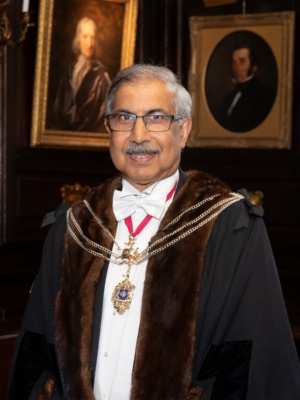
As Master of the Worshipful Society of Apothecaries, I am delighted to announce that we will be delivering the UK (Independent) Diploma in Tropical Medicine and Hygiene (DTM&H) from 2024. In collaboration with course providers; Médecins Sans Frontières (MSF UK, MSF South Asia), the University of Glasgow and the University of Sheffield, the Society will be responsible for conducting the examinations and awarding this prestigious Diploma. A huge welcome to our course partners, examining team and students. We are very much looking forward to working with you all.
The Society has been teaching and examining aspects of medicine for over 400 years and this is something for which we are very proud. With our current portfolio of diplomas including the Diploma in Medicine in Conflict and Catastrophe, which we have taught and examined for the last 30 years, we know that that the DTM&H will be a natural partner for us.
Our diplomates, both from the humanitarian aid sector and military medics, themselves from a number of countries have over many years deployed to natural disasters and conflict zones and used the teaching and qualifications we have provided to deliver much needed help. As a holder of both the DTM&H (from the London School) and the DMCC (Society of Apothecaries), I am personally delighted that the Society has the opportunity to offer this valuable Diploma.
Message from the Honorary Dean
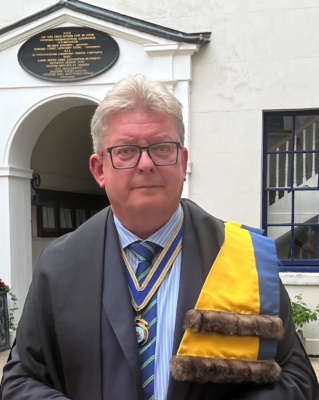
As Dean I am delighted, and honoured, that the Society of Apothecaries has been trusted to administer the Diploma of Tropical Medicine & Hygiene from 2024. With a history of being the oldest awarding medical license to practice organisation in the UK and a pedigree of administering and awarding important career diplomas, such as the Diploma in Genito-Urinary Medicine and the Diploma in HIV Medicine, I am confident that examination candidates will appreciate the experience of sitting and being awarded the DTM&H with us. Finally, as a consultant in public health and travel medicine I recognise the importance of the DTM&H when working in challenging environments overseas.
Professor (Col) David Ross
Meet the Convenor (Chief Examiner)
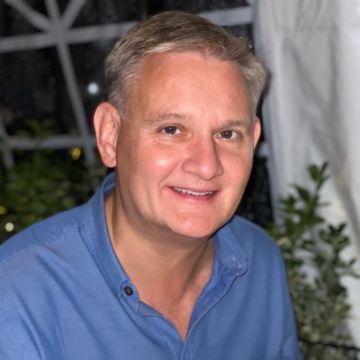
Prof (Col) Mark Bailey is a British physician & professor specialising in infectious diseases & tropical medicine. He has worked in China, Nepal, Sierra Leone, Cyprus, Afghanistan, Iraq, Sri Lanka, South Sudan & Belize and is based in the UK at Birmingham Heartlands Hospital & the Royal Centre for Defence Medicine. He is also Professor of Infection for Warwick Medical School at the University of Warwick & the UK Defence Professor of Military Medicine.
Mark manages civilian & military patients with a wide range of infectious diseases & tropical medicine problems on a regular basis. He also undertakes numerous teaching & examining activities in relation to infectious diseases, tropical medicine & travel medicine with the University of Warwick, Liverpool School of Tropical Medicine, Society of Apothecaries of London, RCPSG Faculty of Travel Medicine, Royal College of Physicians & UK Defence Medical Services. His clinical & research interests include undifferentiated febrile illnesses, tropical skin diseases and venomous bites & stings.
Welcome to Mark and the rest of the examining team who are now preparing for the first DTM&H examinations, which will take place on Wednesday 12 June 2024.
“The University of Glasgow DTMH team are looking forward to working with The Worshipful Society of Apothecaries to prepare an international cohort of students for the professional qualification of Diploma in Tropical Medicine and Hygiene.” Professor Michael Barrett OBE, Dr Christina Naula & Mr Don Ross
“The University of Sheffield DTM&H Preparatory Course are excited to be working with the Worshipful Society of Apothecaries to take forward and develop the qualification of the Diploma in Tropical Medicine and Health for our students” Dr Paul Collini and Dr Ruth Payne
Find out more by clicking here.
