
Society of Apothecaries and the Company of Armourers and Brasiers – a joint symposium
Challenges and Opportunities in the Management of Acute and Chronic Wounds
Overview:
The symposium, organised by the Society of Apothecaries’ Centre for Health Studies and the Worshipful Company of Armourers and Brasiers was held on the 18 March, and brought together over 100 participants from across healthcare, academia, industry, and the emergency services. Attendees included nine livery company Masters and Prime Wardens, senior figures in military and defense surgery, representatives from civilian trauma services, St John Ambulance and the London Ambulance Service, the First Aid Nursing Yeomanry, and a range of medical device companies.
An engaging day of dedicated talks, panel discussions and audience feedback highlighted many important areas for improvement and opportunities to influence change. By raising awareness with our health partners, other medical organisations, livery partners, government bodies and public services, we aim to bring the following issues to the forefront:
 Issues highlighted during the symposium:
- Better availability of compression management tools and devices
- Improved compression devices
- Promoting public confidence to intervene earlier
- Work on the best location of advice for bleed out management and deployment of kits, consider better collocation with CPR equipment
- Promote and highlight the ongoing initiatives across the livery to address root causes of trauma and knife crime
- Enhance the promotion of eye health along with brain health, especially to young people
- Better promotion of the role that community-based optometry services can provide in the management of acute eye problems and linkage to specialist advice and cross linkage to other frontline service providers such as community pharmacies
- Re-evaluation of first aid kits and better focus these for bleed out situations
- Look at the shelf-life issue of bandages with the regulators and industry – more flexibility
- Encourage further research on Thera diagnostics for wound healing
- Foster the environment for developing small companies within the City of London and London the city
- Highlight the unique opportunities and offer mentoring platforms for startup companies in London
Next steps
Conversations & collaborations will continue with our partners to lobby for change and help to introduce new initiatives where we can.
Programme Highlights:
Session One: Acute Wound Management
The first session explored how lessons from military medicine can inform civilian healthcare. Speakers highlighted the critical distinction in the management of compressible and non-compressible wounds, emphasising the importance of rapid bleeding control and reducing the time to definitive treatment. The symposium heard how patients can be differentiated and how this differentiation can be used to optimise interventions.
 The immediate public response was considered in some depth, including:
- Availability and location of emergency equipment
- Public training and preparedness
- Use of digital support tools and apps
Limitations in current first aid kits were also highlighted.
The Master Spectacle Maker highlighted the range of acute eye problems, including traumatic eye injuries which are present in both hospitals and community care. Many of these conditions could be prevented or alleviated through early interventions.
The discussion broadened to include the prevention and reduction of knife crime, emphasising its importance as a public health challenge. Several initiatives supported by livery companies were raised.
Session Two: Chronic Wound Management
Speakers presented data demonstrating the significant morbidity, mortality, and economic burden associated with chronic wounds, and their impact on healthcare systems.
The symposium highlighted challenges faced by nursing professionals in both hospital and community settings, with a range of presentations from both small and large companies and from academia about new approaches.
Advances in Thera diagnostic tools were discussed, which analyse the state of the wound by analysis of cytokine and interleukin levels. The use of AI and 3D reconstruction to guide surgical planning for wound closure and debridement was also highlighted.
Panel Discussion
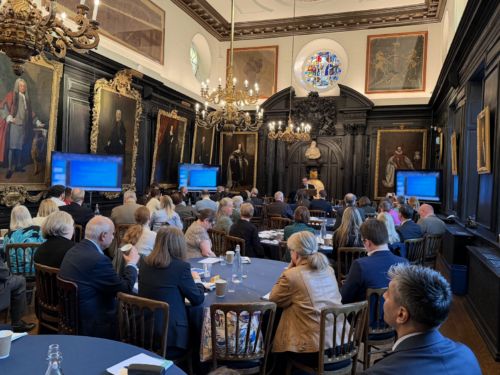
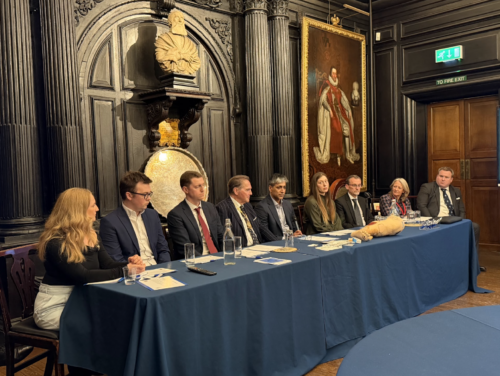
The final session was an extended panel discussion exploring the interaction between how the various stakeholders could be maximised to accelerate the development of new techniques and products and introduce them earlier to the benefit of patients.
Closing Remarks: London as a Life Sciences Leader
The symposium concluded with an upbeat presentation from Dr Angela Kukula from London Health Partners, who discussed London’s position as a leading centre for life sciences. She outlined how the city’s unique combination of academia, industry, the finance sector, artificial intelligence, legal expertise, and insurance systems creates a strong foundation for innovation. This environment enables the translation of research into practical solutions that address unmet medical and societal needs.
The symposium reinforced London’s potential to position itself as a global hub where health and wealth intersect, attracting investment, fostering innovation, and supporting the growth of life sciences companies into global leaders.
