Calling all writers and curious minds.
Dive into the captivating intersection of medical ethics and creative writing with our interactive one-day course, now in its eighth year..
Led by Helen Mosby (Open University) and Philosophy Fellows’ Convenor, Andrew Papanikitas, this masterclass will bring ethical quandaries to life, sharpen your literary skills and deepen your understanding of medical ethics through a wealth of diverse perspectives.
Ever wondered why doctors are so miserable? Find out how anger, resentment, even hate, can arise in an increasingly pressured NHS, and how these dynamics shape frontline care.
Artificial intelligence may soon be able to predict psychiatric relapse while a patient is still able to refuse treatment. For clinicians, such predictions raise a difficult ethical dilemma…
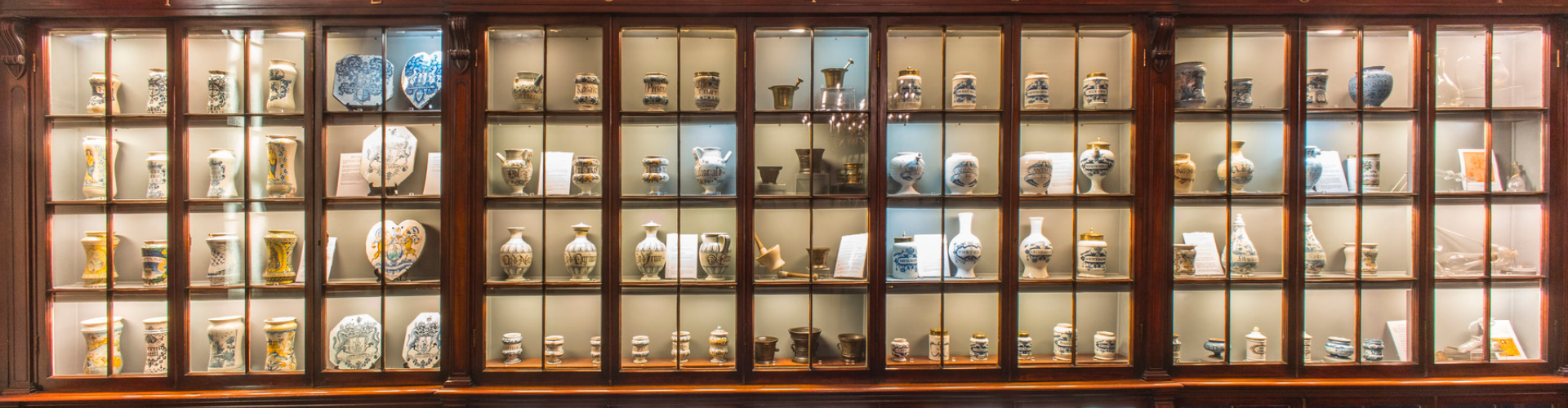
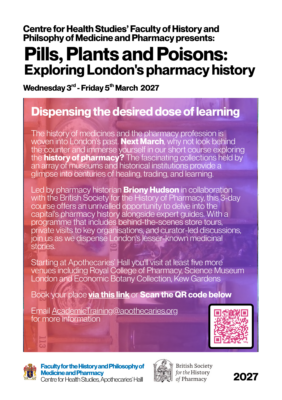
The history of medicines and the pharmacy profession is woven into London’s past. Next March, why not look behind the counter and immerse yourself in our short course exploring the history of pharmacy? The fascinating collections held by an array of museums and historical institutions provide a glimpse into centuries of healing, trading, and learning.
Rats are today seen as a sine qua non of plague, but this is a very recent idea. The Gideon De Laune Lecture explores how the rat became understood as a carrier and spreader of the disease.
Find out how about the history of wax anatomical models and how they have contributed, from the 17th century onwards, to the development of medical education (Monckton Copeman Lecture)
Dr Leslie David Payne was a distinguished medical scientist, dentist, and expert in blast biophysics, ballistic and penetrating injuries, stab wounds, and unarmed combat. From the early 1970s, he served as Ballistic and Blast Archivist at the Royal Army Medical College, alongside running his dental practice. He advised military, medical, police and security services in the UK and US, often working discreetly behind the scenes.
Elizabeth Garrett Anderson lecture: This talk explores the company from a women’s history perspective, arguing that Boots empowered women with new professional identities and consumer choices while simultaneously reinforcing normative standards of beauty and domestic responsibility.
Hans Sloane lecture: Stuart Anderson explores the extent to which the British model of pharmacy was reproduced in Britain’s colonies and dominions as the Empire expanded, and considers the nature of Britain’s pharmacy legacy following the attainment of independence.